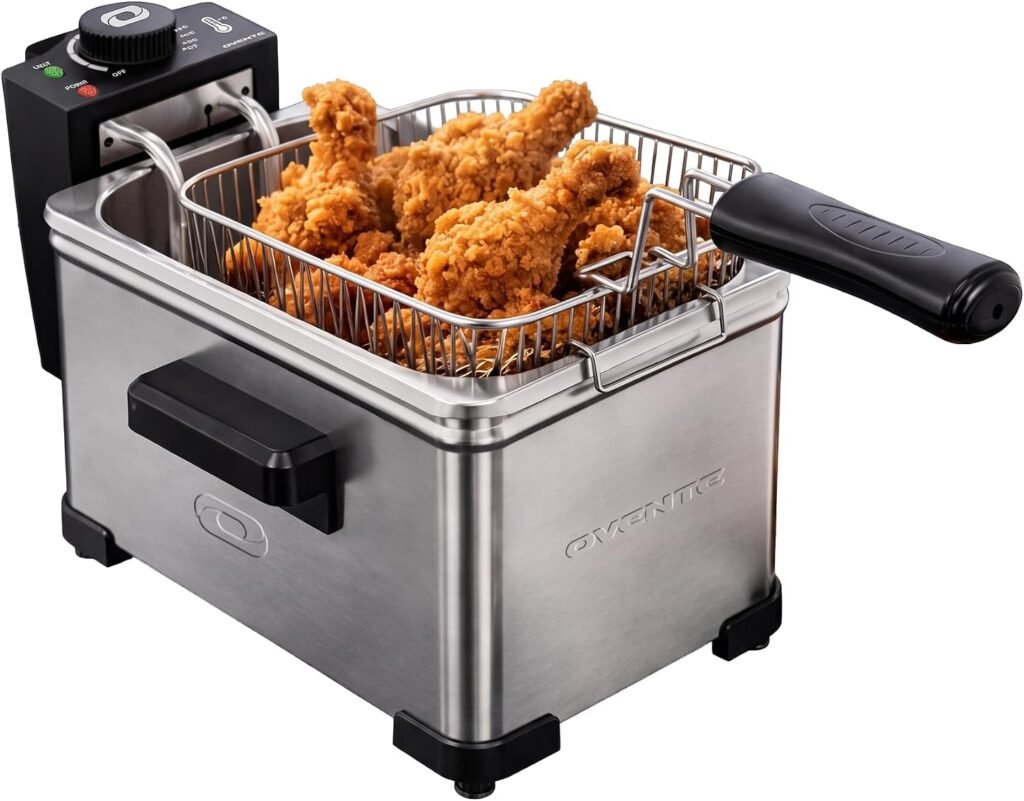
Deep frying is often associated with large pots of oil, restaurant kitchens, and complicated cleanup. In reality, a dedicated countertop fryer can make the process more structured, particularly when only modest quantities of food need to be prepared.
The OVENTE Electric Deep Fryer FDM2201BR is designed around that smaller-scale approach. It has a 2-liter oil capacity, a 1500-watt heating system, adjustable temperature control, a stainless-steel exterior, and a removable frying basket. The model is intended for countertop use and is suited to preparing foods such as French fries, chicken, fish, vegetables, and other fried dishes in relatively small batches.
A compact fryer can be useful in a kitchen where countertop space is limited or where deep-fried food is prepared occasionally rather than in restaurant-sized quantities. At the same time, a smaller appliance has limitations. The 2-liter capacity naturally means that it is aimed at smaller batches than commercial fryers, and users still need to pay close attention to oil temperature, food quantity, moisture, cleaning, and safe handling.
The OVENTE FDM2201BR therefore makes more sense to understand as a compact electric deep fryer for controlled, small-batch cooking rather than simply judging it by its wattage or capacity.
This article explores the fryer from an informational perspective, including its main features, practical cooking applications, temperature management, cleaning considerations, safety principles, and how a compact electric fryer compares with other deep-frying methods.
Introduction to the OVENTE FDM2201BR
Deep frying involves cooking food by immersing it in hot oil.
The oil transfers heat quickly to the surface of the food, allowing foods such as potatoes, breaded chicken, fish, shrimp, vegetables, and other ingredients to develop a browned exterior.
The method can produce a different texture from baking, roasting, or air frying.
However, successful deep frying requires temperature control.
If the oil is too cool, food may take longer to cook and can become excessively oily. If the oil is too hot, the outside can brown rapidly while the interior requires more cooking.
A dedicated electric fryer addresses part of this challenge by combining:
- An oil container
- Heating element
- Thermostat
- Temperature control
- Frying basket
- Countertop housing
The OVENTE FDM2201BR follows this general design.
Its 2-liter capacity places it in the smaller household deep-fryer category, while the 1500-watt heating system provides the power needed to heat the oil and recover temperature after food is introduced.
The smaller format is particularly relevant for people who want to prepare a limited quantity of fried food without maintaining a large commercial fryer.
Key Features of the OVENTE Electric Deep Fryer
2-Liter Oil Capacity
The fryer has a 2-liter oil capacity, making it substantially smaller than many commercial-style countertop fryers.
That capacity can be useful for:
- One or two people
- Small families
- Individual portions
- Side dishes
- Occasional frying
- Small batches of appetizers
The smaller oil volume also means users do not necessarily need to manage the quantity of cooking oil required by a large fryer.
However, capacity should not be confused with the amount of food that can safely be fried at one time.
The frying basket should not be overloaded.
1500-Watt Heating System
The OVENTE FDM2201BR uses a 1500-watt heating system.
Heating power is important because oil needs to reach the desired temperature before cooking begins.
The heating system also has to respond when food is introduced.
Cold or room-temperature food lowers the oil temperature when it enters the fryer. A higher-powered heating system can help the appliance recover toward its target temperature.
However, wattage alone does not determine cooking performance.
Actual results depend on:
- Amount of oil
- Quantity of food
- Food temperature
- Basket loading
- Starting oil temperature
- Ambient temperature
- Heating element design
- Cooking time
The 1500-watt rating should therefore be viewed as one specification rather than a guarantee of a particular cooking result.
Adjustable Temperature Control
Temperature control is one of the central features of an electric deep fryer.
Different foods require different cooking conditions.
For example, a batch of French fries may be cooked differently from breaded chicken or delicate fish.
An adjustable thermostat allows the user to select a temperature appropriate for the recipe.
This is particularly useful when experimenting with different foods because cooking temperature can be adjusted without manually moving a pot between different burner settings.
The exact temperature range and operating instructions should be checked against the current manufacturer’s documentation for the FDM2201BR.
Stainless-Steel Exterior
The fryer has a stainless-steel exterior.
Stainless steel is commonly used for kitchen appliances because it provides a relatively durable surface that can be wiped down after cooking.
Deep frying can leave grease around the cooking area, so an exterior that can be cleaned with an appropriate cloth or sponge is useful.
The stainless-steel exterior does not mean every part of the fryer can be immersed in water.
Electrical components should be handled according to the manufacturer’s cleaning instructions.
Removable Frying Basket
The fryer includes a removable frying basket.
A basket is important because it allows food to be lowered into the oil and lifted out without directly handling individual pieces while they are submerged.
It also makes draining easier.
After cooking, the basket can be raised so excess oil can drain back into the fryer before the food is transferred to a plate or serving tray.
The basket should not be overloaded.
A crowded basket can cause the oil temperature to drop significantly and may result in uneven cooking.
Countertop Design
The OVENTE FDM2201BR is designed as a countertop appliance.
This makes it different from large commercial fryers that may require permanent floor or heavy-duty counter installations.
A countertop fryer can be stored when not in use, although its actual dimensions should be considered before choosing a storage location.
The appliance should be placed on:
- A stable surface
- A level countertop
- A heat-resistant area
- A location away from water
- A position with appropriate clearance
It should not be positioned where children can easily reach the hot oil or basket.
How the OVENTE 2L Deep Fryer Can Be Used
The relatively compact capacity makes the fryer suitable for a variety of everyday foods.
Making French Fries
French fries are one of the most familiar uses for a deep fryer.
Fresh potatoes can be:
- Washed
- Peeled if desired
- Cut into consistent strips
- Rinsed or soaked depending on the recipe
- Dried thoroughly
- Fried in an appropriate batch size
The cooking process varies depending on the desired texture.
Some methods use two frying stages:
- A lower-temperature first stage to cook the potato interior
- A higher-temperature second stage to develop additional browning and crispness
The exact temperatures and timing depend on the recipe.
The important principle is to avoid placing too many potatoes into the fryer at once.
Cooking Frozen French Fries
Frozen French fries are another practical application.
Many frozen fries are specifically designed for deep frying.
The packaging instructions should be followed because different products can have different recommended temperatures and times.
Frozen foods may cause vigorous bubbling when introduced to hot oil.
For that reason, the basket should be lowered carefully.
Avoid dropping frozen food directly into the oil.
Chicken
The fryer can also be used for small batches of chicken.
Potential examples include:
- Chicken wings
- Chicken strips
- Breaded chicken
- Chicken tenders
- Small chicken pieces
Chicken requires particular attention because exterior browning does not guarantee that the interior has reached a safe temperature.
A food thermometer should be used when appropriate to verify doneness.
Chicken Wings
Chicken wings can be prepared in relatively small batches.
The compact fryer can be useful when cooking a few servings rather than a large quantity for a gathering.
To maintain consistent results, arrange the wings so they are not excessively crowded.
If a recipe requires more wings than the basket can accommodate comfortably, multiple batches may be preferable.
Fish
Fish can be prepared in a deep fryer using different coatings.
Examples include:
- Flour
- Breadcrumbs
- Batter
- Tempura-style coating
Fish generally cooks relatively quickly, so timing and oil temperature are important.
Thicker pieces require different cooking times from thin fillets.
Shrimp
Shrimp can be deep fried with:
- Breadcrumb coatings
- Flour coatings
- Batter
- Tempura
Because shrimp cooks relatively quickly, it should be monitored closely.
Overcooking can change its texture.
Onion Rings
Onion rings are another food that works naturally with deep frying.
The onions can be coated with batter or breadcrumbs and fried until the exterior reaches the desired level of browning.
The basket makes it easier to remove several onion rings together.
Fried Vegetables
A compact fryer can also be used for vegetables.
Possible examples include:
- Zucchini
- Mushrooms
- Eggplant
- Cauliflower
- Green beans
- Pickles
Vegetables vary considerably in moisture content, so the cooking time and preparation technique depend on the ingredient.
Fried Pickles
Pickles can be coated in breadcrumbs or batter and fried as an appetizer or snack.
Because pickles contain water, they should be handled carefully when introduced into hot oil.
Patting the exterior dry according to the recipe can help minimize excess moisture.
Mozzarella Sticks
Frozen mozzarella sticks can be prepared in a deep fryer.
Because the cheese can melt quickly, it is important to follow the cooking instructions supplied with the food.
If the coating breaks, melted cheese can enter the oil and create additional residue.
Small-Batch Appetizers
The 2-liter format can be useful for preparing small portions of appetizers.
Examples include:
- Onion rings
- Fried mushrooms
- Chicken tenders
- Vegetable fritters
- Mozzarella sticks
- Shrimp
- Potato wedges
This makes the fryer particularly relevant to households that want fried food occasionally without setting up a large cooking station.
How Temperature Control Affects Frying
Temperature is one of the most important variables in deep frying.
Imagine placing food into oil that is significantly below the intended temperature.
The food will take longer to brown.
It may also spend more time in the oil before the exterior develops the desired texture.
Now consider oil that is too hot.
The exterior may become dark quickly while the interior is still cooking.
This is why recipes often specify a target temperature.
An adjustable electric fryer gives the cook a convenient way to establish that temperature before the food enters the oil.
Why Oil Temperature Drops
Oil temperature naturally changes when food is added.
The food has a lower temperature than the oil, so heat transfers from the oil into the food.
Water present in the food also absorbs energy as it evaporates.
The larger the quantity of food added at once, the greater the potential temperature drop.
This is why batch size matters even with an electric fryer.
Managing Batch Size
A useful approach is to think of the frying basket as a working area rather than a storage container.
Food should have enough space to move through the hot oil.
For example, if a batch of fries fills the basket so tightly that the pieces are packed together, the oil cannot circulate around them as effectively.
A smaller batch can provide more consistent contact with the oil.
If more food is needed, prepare another batch.
Who the OVENTE 2L Deep Fryer May Be Suitable For
Individuals
Someone cooking primarily for one person may not need a large commercial fryer.
A 2-liter capacity can provide a more manageable format for small portions.
Couples
Two people can use the fryer to prepare:
- Fries
- Chicken wings
- Fish
- Shrimp
- Appetizers
without necessarily needing the capacity of a larger fryer.
Small Families
For small households, the appliance can provide enough capacity for selected side dishes or smaller fried-food meals.
Larger family gatherings may require multiple batches.
Occasional Fryers
People who only deep fry occasionally may prefer a compact appliance over a large commercial-style machine.
The smaller footprint can make storage easier.
Apartment Kitchens
Countertop space can be limited in apartments.
A compact fryer can be easier to accommodate than a large commercial fryer, although users still need to consider ventilation, storage, and electrical requirements.
Important Things to Consider
A 2-Liter Fryer Is Not a Commercial-Volume Appliance
Although dedicated electric fryers are sometimes described using commercial-style terminology, a 2-liter oil capacity is relatively compact.
It is better suited to small-batch preparation than continuous restaurant-volume frying.
If a restaurant needs to produce large quantities of fried food throughout the day, a larger commercial fryer may be more appropriate.
Oil Capacity Is Different From Food Capacity
A 2-liter oil capacity does not mean that the fryer can cook 2 liters of food.
The actual food capacity is determined by the basket dimensions and manufacturer’s recommended loading level.
Never assume that the entire oil volume can be matched with an equivalent volume of food.
Do Not Overfill With Oil
Deep fryers have minimum and maximum oil levels for a reason.
Too little oil can expose the heating element or interfere with temperature control.
Too much oil can increase the risk of splashing or overflow when food is added.
The markings and instructions supplied with the fryer should always be followed.
Do Not Operate the Fryer Without Oil
The heating element should not be operated without the required amount of oil.
A dry fryer can overheat and may become damaged.
Before turning the appliance on, verify that the oil level is appropriate.
Water and Hot Oil Should Never Be Combined
Water can rapidly turn into steam when it contacts hot oil.
This can cause oil to splatter violently.
For this reason:
- Dry wet foods appropriately.
- Keep wet utensils away from the fryer.
- Never pour water into hot oil.
- Do not clean the fryer while oil is hot.
- Keep the electrical components away from water.
Be Careful With Frozen Food
Frozen food can contain ice crystals.
When ice enters hot oil, it rapidly becomes steam.
This can create vigorous bubbling.
Lower frozen food slowly and carefully into the fryer.
Do not drop it from a height.
Do Not Leave Hot Oil Unattended
Deep frying involves hot oil at high temperatures.
The fryer should remain supervised while it is operating.
Keep children and pets away from the cooking area.
Do not position the appliance near flammable objects.
Electrical Requirements
The 1500-watt rating is relevant when considering the electrical setup.
At 120 volts, 1500 watts represents approximately 12.5 amps under ideal conditions.
That means the appliance can place a meaningful load on a household circuit.
The actual electrical requirements should be confirmed from the product’s rating label and instructions.
Avoid using an extension cord unless the manufacturer specifically allows it and the cord is appropriately rated.
Placement on the Countertop
Choose a location that provides:
- A stable surface
- Adequate clearance
- Access to an appropriate electrical outlet
- Distance from the sink
- Distance from flammable materials
- Easy access for filling and draining oil
Avoid placing the fryer where the basket could be knocked accidentally.
Choosing the Right Cooking Oil
Different oils have different characteristics.
Common choices for deep frying include:
- Canola oil
- Vegetable oil
- Sunflower oil
- Peanut oil
- Corn oil
The appropriate choice depends on cooking temperature, flavor preference, dietary considerations, availability, and allergies.
For households with peanut allergies, peanut oil may obviously not be appropriate.
Oil Reuse
Cooking oil can sometimes be filtered and reused, depending on what was cooked and how the oil was handled.
However, oil deteriorates with repeated heating.
Signs that oil may need to be replaced include:
- Strong or unusual odor
- Excessive darkening
- Persistent foaming
- Smoking at normal frying temperatures
- Significant food debris
- Unpleasant flavor transfer
If in doubt, replacing the oil is preferable to continuing to use degraded oil.
Filtering Oil
After the oil has cooled sufficiently, it can potentially be filtered to remove loose crumbs.
Small particles left in oil can burn during later frying sessions.
A suitable filtering method can help keep the oil cleaner.
Never attempt to filter or transfer very hot oil.
Cleaning the Fryer
Cleaning is an important part of deep-fryer maintenance.
Oil can accumulate around the:
- Frying basket
- Oil container
- Heating assembly
- Interior walls
- Exterior housing
The exact removable components and washing instructions should be confirmed using the manufacturer’s manual.
Electrical components should not be submerged unless explicitly designed for that purpose.
Cleaning the Basket
The basket is in direct contact with food and should be cleaned after use.
Remove remaining food particles and wash the basket according to the manufacturer’s instructions.
Pay particular attention to areas where breading or crumbs can accumulate.
Cleaning the Oil Container
After the oil has been removed and the appliance has cooled, the oil container can be cleaned according to the manufacturer’s procedure.
Do not pour used cooking oil down the sink.
Oil can solidify and contribute to drain blockages.
Instead, allow the oil to cool and dispose of it according to local waste-management guidance.
Storing Used Oil
If oil is going to be reused, it should be cooled and filtered before being placed in a suitable sealed container.
Store it away from:
- Heat
- Direct sunlight
- Water
- Strong-smelling foods
Labeling the oil can also help identify how it was used.
Oil used for strongly flavored foods may transfer those flavors to later batches.
Nonstick Versus Stainless-Steel Fryer Interiors
When comparing deep fryers, users may encounter different interior materials.
A stainless-steel cooking vessel is durable and relatively straightforward to clean.
Nonstick interiors may offer easier food release and cleaning.
The OVENTE FDM2201BR uses a stainless-steel exterior, while exact internal construction should be verified against the manufacturer’s current specifications.
Comparing General Deep-Fryer Categories
The OVENTE 2-liter fryer belongs to the compact electric deep-fryer category.
Understanding how that category compares with alternatives can make the decision easier.
Compact Electric Deep Fryers
These appliances generally feature:
- Small to medium oil capacity
- Integrated heating element
- Adjustable thermostat
- Removable basket
- Countertop footprint
They are designed for household use and relatively small batches.
Larger Electric Fryers
Larger countertop fryers may offer:
- Greater oil capacity
- Multiple baskets
- Multiple tanks
- Higher wattage
- Larger food capacity
They can be more suitable for frequent batch frying.
The trade-off is greater space and electrical demand.
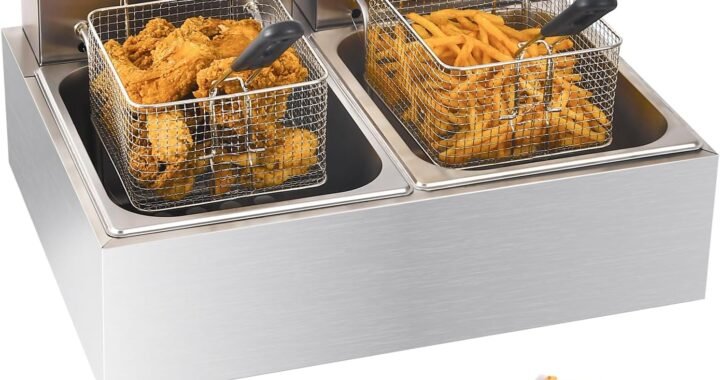
Dual-Tank Fryers
Dual-tank fryers divide the cooking area into separate sections.
This can help when cooking different foods.
They are particularly relevant to households or food businesses that frequently prepare multiple fried foods at the same time.
Stovetop Deep Frying
Stovetop frying uses a separate pot or Dutch oven.
The user provides:
- Cooking vessel
- Oil
- Thermometer
- Heat source
- Basket or slotted utensil
This can be flexible, but temperature control requires more direct attention.
Air Fryers
Air fryers use circulating heated air rather than immersing food in oil.
They can produce browned and crisp surfaces with substantially less cooking oil.
However, the cooking process and texture are different from traditional deep frying.
Someone seeking the texture associated with foods immersed in hot oil may prefer a conventional deep fryer.
Deep Fryer Versus Air Fryer
A simple comparison can be useful.
| Feature | Compact Deep Fryer | Air Fryer |
|---|---|---|
| Main cooking medium | Hot oil | Heated air |
| Oil requirement | Significant | Usually small amount or none |
| Typical texture | Traditional fried texture | Air-fried texture |
| Batch style | Oil immersion | Basket circulation |
| Oil management | Important | Minimal |
| Cleanup | Requires oil handling | Generally simpler |
| Common foods | Fries, chicken, fish, appetizers | Fries, chicken, vegetables, snacks |
Neither category is universally appropriate for every kitchen.
The choice depends on the desired cooking method and the user’s priorities.
Practical Tips for Better Deep-Frying Results
Cut Food Consistently
Food pieces of similar size tend to cook at similar rates.
This is especially useful for potatoes and chicken pieces.
Dry Food Where Appropriate
Surface moisture can cause bubbling.
Drying food appropriately before frying can help manage this.
Preheat the Oil
Allow the fryer to reach the desired temperature before adding food.
Starting with oil that is too cool can affect the result.
Avoid Overcrowding
Use manageable batches.
Monitor the Temperature
Temperature changes when food enters the oil.
Keep an eye on the thermostat and allow the fryer to recover when needed.
Drain Food After Frying
Raise the basket and allow excess oil to drain before transferring the food.
Planning a Small Fried-Food Meal
A compact fryer can be used to prepare a simple meal without requiring restaurant-sized equipment.
For example:
Main
Breaded chicken strips
Side
French fries
Vegetable
Fried zucchini
Because the fryer has limited capacity, these foods may need to be prepared sequentially.
Planning the order can make the process easier.
Foods that can remain warm for a short period may be prepared first, while foods that are most sensitive to texture can be cooked closer to serving time.
Using a Small Fryer for Parties
A 2-liter fryer can still be useful for small gatherings, but batch planning becomes more important.
Instead of trying to fry everything simultaneously:
- Prepare ingredients in advance.
- Heat the oil.
- Fry the first batch.
- Drain and serve.
- Allow the oil to recover.
- Fry the next batch.
A compact fryer can therefore support a gathering, but it should not be treated like a high-volume commercial fryer.
Frequently Asked Questions
What is the capacity of the OVENTE FDM2201BR?
The fryer has a 2-liter oil capacity.
This places it in the compact household deep-fryer category.
How much power does it use?
The OVENTE FDM2201BR is rated at 1500 watts.
The actual electrical draw can depend on operating conditions, but users should plan around the appliance’s rated electrical specifications.
Is the OVENTE FDM2201BR an electric deep fryer?
Yes. It is designed as an electric countertop deep fryer with an integrated heating system and temperature control.
What foods can be cooked in this fryer?
It can be used for many traditional deep-fried foods, including:
- French fries
- Chicken
- Fish
- Shrimp
- Onion rings
- Vegetables
- Mozzarella sticks
- Fried appetizers
The appropriate temperature and timing depend on the recipe.
Can I fry frozen food?
Many frozen foods are suitable for deep frying.
Follow the package instructions and introduce frozen food carefully because moisture and ice can cause hot oil to bubble aggressively.
Is 2 liters enough for a family?
That depends on the household and the food being prepared.
A 2-liter fryer is more appropriate for small batches than large family gatherings.
For several people, multiple batches may be necessary.
Can I cook chicken in it?
Yes. Chicken wings, tenders, strips, and other appropriately sized chicken pieces can be deep fried.
Use a food thermometer to verify that chicken reaches a safe internal temperature.
Can I make French fries?
Yes. French fries are a common application for a compact deep fryer.
Fresh or frozen fries can be prepared according to their respective cooking methods.
What oil should I use?
Common deep-frying oils include canola, vegetable, sunflower, corn, and peanut oil.
The best option depends on the recipe, cooking temperature, flavor preference, dietary needs, and allergy considerations.
Can cooking oil be reused?
Oil can sometimes be reused after filtering and proper storage, but repeated heating gradually degrades it.
Discard oil if it develops an unusual smell, excessive darkening, persistent foaming, or other signs of deterioration.
Can I pour used oil into the sink?
No.
Used cooking oil should be cooled and disposed of according to local waste-management guidance.
Pouring oil into a drain can contribute to plumbing problems.
Should food be completely dry before frying?
Food should be handled according to the recipe, but excess surface moisture should generally be minimized because water can cause hot oil to splatter.
This is particularly important with frozen foods and freshly washed ingredients.
How do I prevent food from becoming too oily?
Several factors can influence oil absorption.
Useful practices include:
- Maintain the appropriate temperature.
- Avoid overcrowding.
- Drain food after frying.
- Use fresh, properly maintained oil.
- Follow the recipe’s recommended cooking time.
Why does the oil temperature drop when food is added?
Food is cooler than the hot oil, so heat transfers from the oil into the food.
Moisture in the food also absorbs heat as it turns into steam.
Larger food quantities can cause a greater temperature drop.
Can I fry multiple batches?
Yes.
Multiple batches may actually be preferable when the basket would otherwise become crowded.
Allow the oil to recover to the appropriate temperature between batches.
Can I fry chicken and French fries in the same oil?
It is technically possible, but flavor transfer and dietary considerations should be considered.
Chicken coatings can leave crumbs and flavors in the oil.
If separate cooking oils are important for dietary, allergy, or flavor reasons, separate oil should be used.
Does the fryer require ventilation?
Deep frying produces heat, steam, and cooking odors.
Adequate kitchen ventilation is useful.
Commercial environments may have specific ventilation requirements that do not necessarily apply to a household kitchen.
Can I leave the fryer unattended?
Hot oil should not be left unattended.
Remain nearby while the appliance is operating.
Can children use the fryer?
Hot oil creates burn and fire hazards.
Children should not operate or approach an active fryer without appropriate adult supervision and according to the manufacturer’s safety instructions.
Can I use an extension cord?
High-wattage appliances require appropriately rated electrical connections.
Do not use an extension cord unless the manufacturer specifically permits it and the cord is suitable for the appliance’s electrical load.
Is a 1500-watt fryer powerful enough?
The 1500-watt rating is appropriate for a compact household fryer, but actual cooking performance depends on oil volume, food quantity, temperature, and other factors.
Wattage alone does not determine the final cooking result.
How should the fryer be cleaned?
Allow the appliance and oil to cool appropriately first.
Remove and clean the applicable components according to the manufacturer’s instructions.
Keep electrical components dry unless they are specifically designed to be washed.
How often should the oil be changed?
There is no universal number of uses.
Oil should be evaluated based on its appearance, smell, foaming, smoking behavior, and how it has been used.
Frequent high-temperature cooking and heavily breaded foods can cause oil to deteriorate faster.
Conclusion
The OVENTE Electric Deep Fryer FDM2201BR is designed around a relatively simple idea: provide a dedicated countertop appliance for preparing small batches of traditional deep-fried food.
Its 2-liter capacity and 1500-watt heating system place it in a compact category that can be relevant to individuals, couples, small families, and people who prepare fried food occasionally. Rather than requiring a large commercial-style fryer, this format provides a smaller cooking environment that can be stored or positioned on a kitchen countertop when needed.
The adjustable temperature control is one of the most important practical features because temperature is central to deep-frying results. Maintaining an appropriate oil temperature can help food cook more consistently, while batch size, food moisture, oil condition, and preparation technique all remain important variables.
The removable frying basket also simplifies the basic workflow. Food can be lowered into the oil, lifted out after cooking, and allowed to drain before serving.
The stainless-steel exterior provides a conventional kitchen-appliance finish and can be wiped down after use, while the internal and electrical components require cleaning according to the manufacturer’s instructions.
The fryer is particularly suited to foods such as French fries, chicken wings, fish, shrimp, onion rings, fried vegetables, mozzarella sticks, and other small-batch appetizers. It can also be useful when a household wants traditional deep-fried texture without maintaining a large restaurant-style fryer.
At the same time, the 2-liter capacity is an important limitation to understand. This is not a high-volume commercial fryer. Preparing food for a large family or gathering may require multiple batches, and trying to compensate by overcrowding the basket can reduce oil temperature and affect cooking consistency.
Electrical requirements should also be considered. At 1500 watts, the appliance represents a meaningful load on a household electrical circuit. The rating label and manufacturer’s instructions should be followed, and the appliance should be connected to an appropriate outlet without improvised electrical arrangements.
Safe handling is equally important. Hot cooking oil can cause serious burns, and water should never be introduced into hot oil. Food should be lowered carefully, frozen ingredients should be handled cautiously, the fryer should remain supervised during operation, and the appliance should be positioned away from children, pets, water sources, and flammable materials.
Oil maintenance is another part of the ownership experience. Depending on what is being cooked, oil can sometimes be filtered and reused, but it gradually deteriorates through repeated heating. Changes in smell, color, foaming, or smoking behavior can indicate that it is time for replacement.
Compared with a large commercial fryer, the OVENTE’s smaller format is more suited to everyday household quantities. Compared with stovetop frying, it provides a dedicated heating system and temperature-control mechanism. Compared with an air fryer, it uses traditional oil immersion rather than circulating heated air, so the cooking method and resulting texture are fundamentally different.
For someone who enjoys traditional fried foods but does not need restaurant-scale capacity, a compact electric deep fryer can be a practical addition to a kitchen. The most important considerations are not simply the advertised capacity or wattage, but whether the fryer matches the user’s cooking habits, available counter space, electrical setup, cleaning preferences, and expected batch sizes.
Ultimately, the OVENTE FDM2201BR is best understood as a small-batch electric deep-frying appliance. Its 2-liter oil capacity provides a more compact alternative to larger fryers, while the 1500-watt heating system and adjustable temperature control are designed to support everyday deep-frying tasks.
Anyone considering this type of appliance should focus on using appropriate oil levels, maintaining suitable temperatures, avoiding overcrowding, keeping water away from hot oil, and following the manufacturer’s care and safety instructions. With those considerations in mind, a compact fryer can provide a dedicated way to prepare traditional fried foods at home without requiring the footprint of a larger commercial unit.